

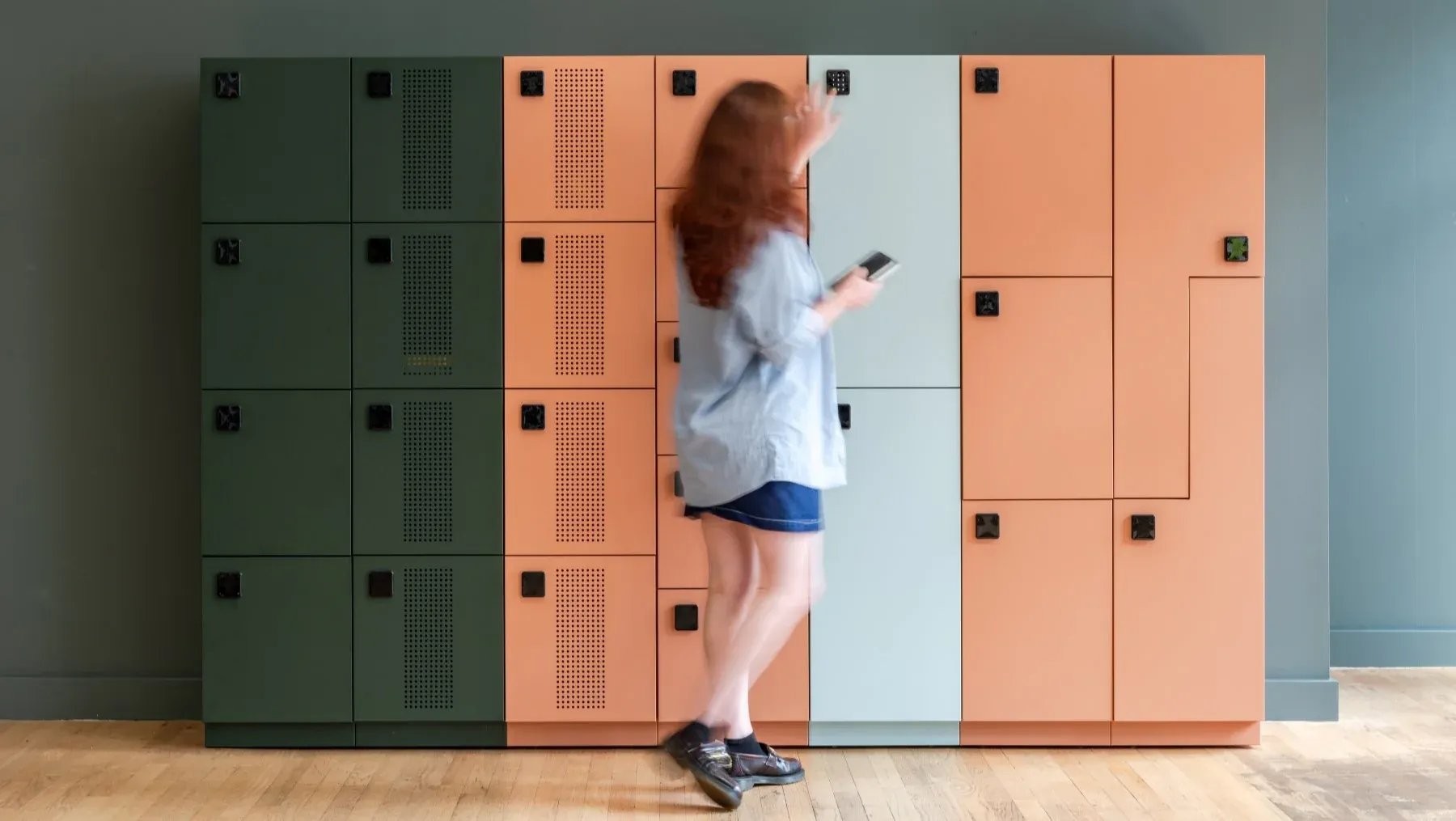
It can be challenging to decide on whether to get new lockers. The installation process can be frustrating, and there’s a budget to consider. One question to ask yourself is why do existing lockers not work for you. If the answer is in their size or they’re worn out, then you should probably consider getting new lockers.
When should you retrofit instead of buying new?
However, if the issue is in the lock, then there’s a more sustainable option - retrofit.
You can combine your existing lockers with a smart lock system in a matter of minutes. The old lock is removed, and the new one comes in its place. The battery-operated smart locks work best since there are no wires, making for easy and quickinstallation.
Why retrofit your lockers?
-
Make locker usage a better experience for your users. Having a smart lock that is app-open or pincode can alleviate the frustrations of handling keys or cards.
-
Managing lockers becomes a seamless process with the real-time usage visibility function.
-
You can create a smart and modern environment for your space by implementing these simple changes.
Retrofit vs purchasing new lockers
Retrofitting is both sustainable and cost-effective. If you’re satisfied with the lockers you have, you can save time and money by just replacing the old locks with smart locks.
The installation process is also much quicker and easier. Depending on the number of lockers installed, you can have them transformed in anywhere from a few minutes up to a few hours.
Compared to possible days of installing new lockers, the difference is significant.
Yellowbox smart locker system is perfect for retrofitting. The wireless smart lock is compatible with any locker door, and the many software features are sure to transform your space.
FAQ's
Can smart locks be retrofitted onto existing lockers?
Yes. Both wired and wireless locks can be retrofitted onto existing cabinetry, so you do not always need new joinery. Wireless locks are especially quick to fit because they need no cabling, but wired locks can be retrofitted too.
Do smart lockers need power and cabling?
It depends on your approach. Wired locks run power and data through the locker joinery, which suits permanent, high-traffic banks and can support in-locker device charging. Wireless locks are battery powered and need no cabling, which suits retrofits and floors that get reconfigured. Neither is universally better, and many workplaces use a mix.
Are smart lockers good for sustainability?
A smart locker reduces the number of lockers and floor space needed, lowering material and energy use and potentially contributing to green building ratings. Retrofitting smart locks onto existing lockers, rather than replacing them, adds to the benefit.
What are the main types of locker locks?
There are three: combination (code) locks, key locks, and electronic smart locks. Combination and key locks are cheaper but rely on manual administration and replacements. Electronic smart locks cost more upfront but offer higher security, easy use, multiple locker access methods and large savings in management time.